900+ Users Interviewed
10+ Years
200+ Product Teams
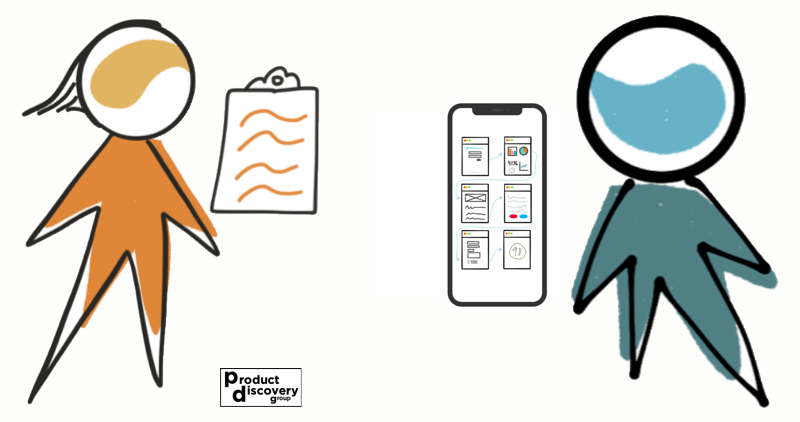
The prototype interview is a valuable and efficient method for validating product ideas.
It tests your potential solutions while at the same time verifying your assumptions about the problems or opportunities that your target customer might be having.
Yet, most Product teams don’t often validate solutions with users, if at all.
These are my practical lessons learned from 10+ years of recruiting and interviewing over 900 users.
First, set up the right prototype experiment and plan how you’re going to run the prototype test.
As you’re creating your prototypes, recruit and screen for your target customers.
Once you have a user in front of you (on Zoom or in person), make sure you kickoff the interview correctly and avoid saying these no-no phrases.
In the prototype interview, you will listen, observe, and take proactive steps to make the most of the time you have with the user.
Even though you’ve collected a lot of data, you can speed up your analysis, determine whether you’ve got a winning solution, and decide on your next steps sometimes in 30 minutes or less.
The full list of articles is listed below.
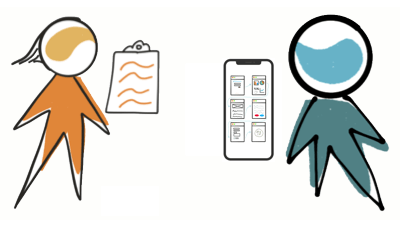
Most Product teams don’t talk to users at all. Others don’t do it often enough.
Use this “no excuses” approach to find and interview users.
These are my practical lessons learned from 6+ years of recruiting and interviewing users.
Many Product teams only listen to users in the beginning of the product development process.
After this initial research, they build their solution but don’t test it as they create it.
This gap in interacting with users (sometimes lasting months) is the Product Discovery Valley of Death.
Read these quick tips for recruiting and screening users
Based on 500+ users and 60+ Product teams over 5+ years of interviewing
When I first started interviewing users, I struggled to analyze the results.
We weren’t organized in how we asked for user feedback. And so analysis took too long.
User interviewers often talk too much, ask overly-specific questions or just ask the wrong type of question.
And when you lead interviews like this, the responses won’t be actionable.
Kicking off an interview with a user can be simple and stress free.
For most users, it’s the first or second time they are participating in a user test.
So at the start of the interview, I make the user feel comfortable and do a few things to make the interview as actionable and efficient as possible.
Interviewers often miss important user reactions.
I’ll hear users say “wow” when they encounter a concept but the interviewer will continue with their prepared script.
We need to stop and ask the user when we hear a reaction like that.
Many interviewers try to keep the user on the happy path rather than watching where the user wants to go.
Instead of talking when a screen first comes up…start watching and waiting.
Silence and frustration are necessary for teams to see what they need to fix.
Though interviewers should primarily listen and observe, there are moments when they need to interrupt or take an action.
Being proactive during a solution test interview is fine as long as it’s rare.
The emotional high of conducting user interviews is often met with the spiritual low of having to analyze the results.
User testing creates a lot of unstructured data: interview notes, video recordings, screener questionnaires and so on.
Teams can easily get overwhelmed with the amount of data they need to analyze.
Don’t use your gut to figure out which solution users preferred the most.
This introduces bias and reduces morale as different team members often have conflicting gut reactions.
Use a quantitative approach.
Everybody hopes that Product Discovery will yield clear answers in a fixed time frame.
In reality, user feedback is not unanimous and it often takes multiple rounds of solution testing to determine a result.
So when are you done? And did you find a winning solution?
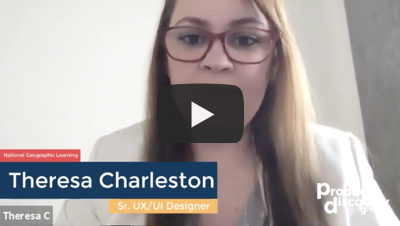
Sometimes you need to find specific users fast. Theresa Charleston of National Geographic Learning describes websites that have deep user panels and can get results fast.
A remote user test can either feel like a tech support session gone wrong or a harmonious meeting of the minds. Theresa Charleston of National Geographic Learning tells us how to prepare for an insightful interview and set the user at ease even when they may be far away or new to user testing.
Jim is a coach for Product Management leaders and teams in early stage startups, tech companies and Fortune 100 corporations.
Jim co-founded PowerReviews which grew to 1,200+ clients and sold for $168 million. He product-managed and architected one of the Internet's first ecommerce systems at Fogdog.com that went IPO at a $450 million valuation.
These days, he coaches companies to find product-market fit and accelerate growth in digital health, financial services, ecommerce, internal platforms, machine learning, computer vision, energy infrastructure and more.
He graduated from Stanford University with a BS in Computer Science. He lectures in Product Management at UC Berkeley.

Has your Product team created a “pixel perfect” design before even talking to users?
Does the initial design have more than 10 screens?
If so, the designs are overbuilt and too big to learn from.